
Research Instruments

Frameworks & the Problem Quality Questionnaire

A collection of validated instruments and design frameworks I have developed and refined over the past two decades — spanning problem-based learning, online learning, and cyber-physical education.

Featured Instrument

Effective problems for learning

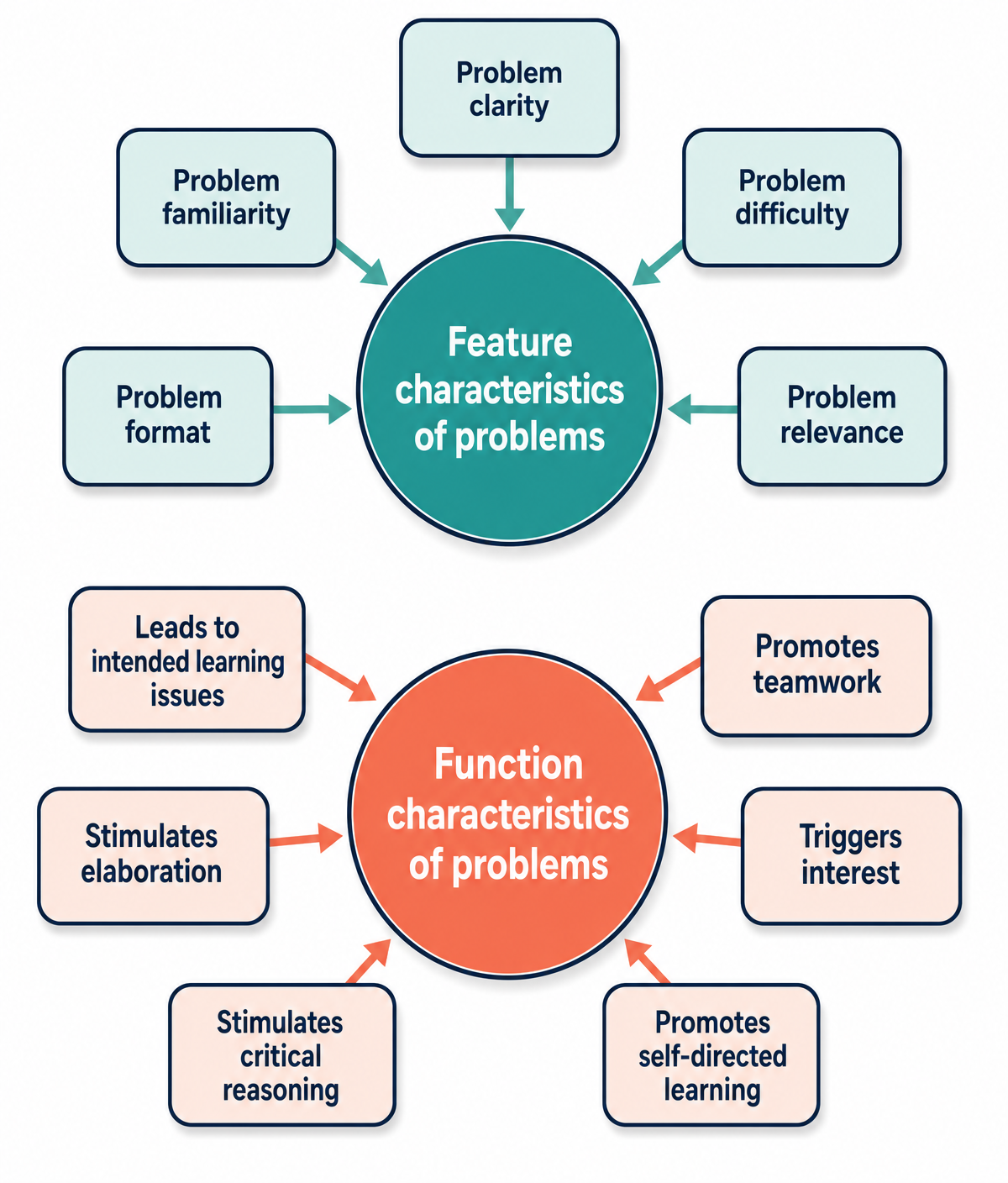
Features (form)Functions (learning)
Diagram showing Feature characteristics of problems (clarity, familiarity, difficulty, format, relevance) and Function characteristics of problems (leads to intended learning, promotes teamwork, triggers interest, stimulates elaboration, promotes critical reasoning, promotes self-directed learning)

Adapted from Sockalingam & Schmidt (2011, 2012) — the framework underpinning the PQRS.

Interactive · 2 min

How good is your problem to drive learning?

The Problem Quality Rating Scale (PQRS) is a validated instrument I developed during my PhD at Erasmus University to measure what actually makes a problem work in problem-based learning — not just how it looks on paper, but whether it triggers curiosity, reasoning, and productive group discussion.

Bring one of your own PBL problems to mind. Rate 11 short statements. Get an instant quality score and a diagnostic report telling you where the problem shines — and where it may need rework.

11 items · 5-point Likert · Anonymous · Nothing is stored

All frameworks & instruments

Validated instrument2010–2012

Problem Quality Rating Scale (PQRS)

A 32-item rating scale to evaluate the quality of problems used in problem-based learning. Developed during her PhD at Erasmus University and validated with polytechnic students in Singapore. The scale measures both structural features of the problem and the learning functions it triggers.

Conceptual framework2012

Characteristics of Effective Problems

A framework distinguishing the features of a problem (clarity, format, familiarity, difficulty) from its functions (the cognitive and social learning processes it should trigger). Widely cited in medical, engineering, and polytechnic PBL programmes.

Emerging model2022–2025

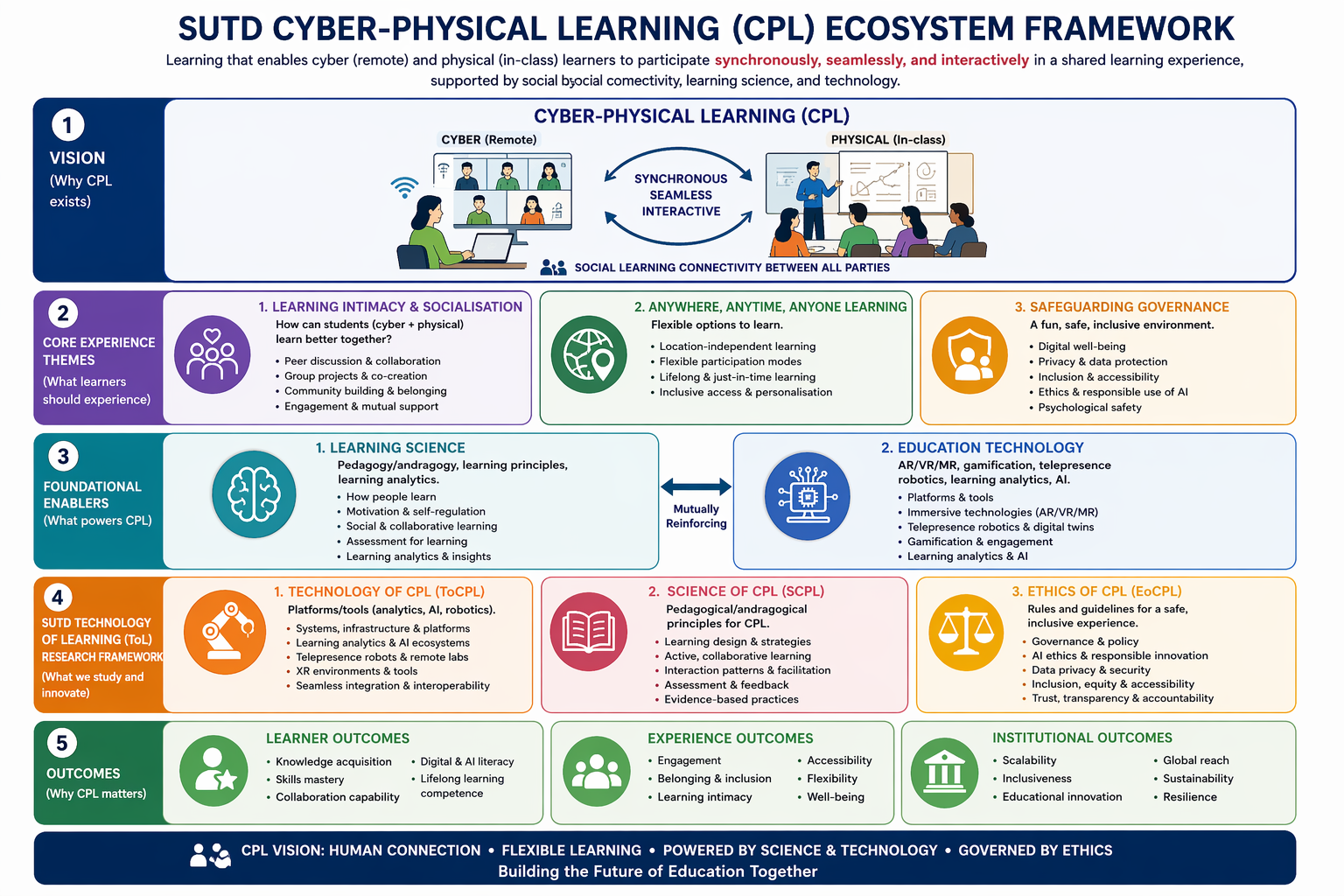
Cyber-Physical Learning Framework

A framework for post-pandemic higher education that intentionally blends physical, digital, and virtual learning experiences. Co-developed at SUTD with Kenneth Lo and Prof. Pey Kin-Leong — articulated in SUTD's national white paper and extended in a 2025 Springer perspective on the future of education.

Design framework2020

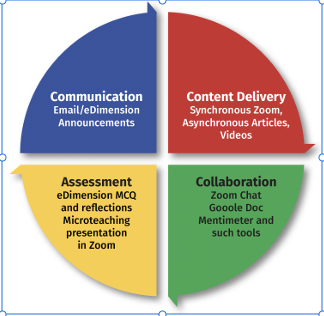
Designing Learning Experiences for Online Teaching

A pragmatic framework developed during the COVID-19 pivot at SUTD, guiding instructors to design engaging synchronous and asynchronous learning experiences for adult learners.

Full publication list on Google Scholar →